En thumbnials of the images

From Project to Product · Maik Laubin · VP Digital Solutions · Koenig & Bauer Durst · Open House

At Koenig & Bauer Durst’s variJET Open House in Radebeul, I sat down with Maik Laubin, and the conversation confirmed something I’ve been thinking every time I’ve seen the machine over the past couple of years.

The variJET has moved from development into production.

That may sound like a small distinction, but it isn’t. Anyone who has followed digital print knows how long that transition can take. You tweak inks, adjust software, improve handling, expand substrate compatibility, and every time you think you are close, something else needs to be solved. What Maik explains here is that we are no longer in that phase. There are still improvements, there always will be, but the machine is now operating as a production platform, not as an ongoing experiment.

One of the biggest hurdles has been substrates. Digital packaging has historically come with compromises, special materials, pre-coating requirements, limitations that made integration into existing workflows more complicated than necessary. The ambition with the variJET has been to remove that friction and allow converters to run the same materials they already use in offset. According to Maik, that ambition is now largely fulfilled, and that is probably one of the most important steps toward real adoption.

Because the real story here is not “digital versus offset.” It is how the two technologies work together. The variJET 106 and the Rapida 106 are built around the same format, the same production logic, and the same finishing environment. This is not about replacing one with the other, but about understanding where each technology makes the most sense. And that comes down to cost and application.

Short runs are central to that discussion, but not in the way many people still think about them. We are not talking about a few hundred sheets. We are talking about several thousand B1 sheets, where setup time, flexibility, and versioning start to outweigh the efficiencies of conventional production. That is where digital begins to make economic sense, and that is where this platform is positioned.

Color has also been a point of discussion for years, particularly in packaging where brand consistency is critical. With a seven-color configuration and extended gamut, the results coming off the variJET are now at a level where comparisons with offset are not theoretical anymore. They are practical. Whether one is “better” than the other is less relevant than the fact that both can now deliver what the market expects.

What I find more interesting is how the perception changes once people see it running. There are still customers who approach digital with skepticism, and there are others who immediately understand the implications. Some come with years of digital experience, others have none. That variation is still very present, but it is also clear that the direction is moving toward shorter runs, more complexity, and a need for greater flexibility in production.

That is exactly where this type of platform fits.

The mistake would be to look at it through an offset lens. If you do that, you reduce it to a slower version of something you already understand. If you instead look at what it enables, how it can be integrated, where it changes the economics, and how it opens up new applications, then the discussion becomes far more relevant.

This interview with Maik Laubin is not about future potential. It is about where the technology stands today and how it is being positioned in real production environments.

En thumbnials of the images

Inkjet is ALSO Optimizing Offset · Daniel Velema · Managing Director · Koenig & Bauer DURST

At Koenig & Bauer Durst’s variJET Open House in Radebeul, I speak with Daniel Velema about a machine that has taken time to get here, and for good reason.

The variJET hasn’t been rushed to market. As Daniel explains, the focus has been on getting it right, not getting it out. That means working closely with customers, refining the platform, and making sure it performs in real production, not just in demos.

What stands out is the platform thinking. Markets change fast, and any machine designed years ago would look different if you started today. The answer is not to freeze technology, but to build something that can evolve. New inks, new printheads, new drying technologies, all of that needs to fit into a system customers can run for a decade or more.

At the same time, this is no longer development. Machines are in the field, more are being installed, and the positioning is becoming clear. Folding carton is the core application, where the combination of flexibility, SKU variation, and turnaround time creates real value alongside offset.

But as always, customers will push it further. Calendars, posters, commercial work, things that were never the primary intention, are already being tested. That’s where platforms prove their value.

Watch the interview with Daniel Velema to hear how a long development process turns into a production-ready platform, and why patience may have been the right strategy.

En thumbnials of the images

VariJET is more than packaging · Pierre Hertzel · Business Manager · Schelling · Open House

At Koenig & Bauer Durst’s Open House in Radebeul, I speak with Pierre Hertzel from Schelling AG - the first company to install the variJET 106.

Let’s get one thing out of the way. If you look at the variJET as a “digital alternative to offset,” you’re already missing the point.

What Pierre explains—very clearly—is that this isn’t about moving short runs away from conventional production. It’s about doing things you couldn’t do before. And when you listen carefully, you realize that the real conversation isn’t about print at all. It’s about value.

He shares a case with a large confectionery brand. They didn’t ask for cheaper packaging. They asked for insight. They wanted to understand what happens in retail, store by store. The answer wasn’t price per sheet. It was variable data. Unique QR codes. Packaging as a data carrier.

That’s a different business.

And that’s why the usual discussions about cost don’t really apply. Because when a brand owner sees an opportunity to connect with customers, track behavior, or create something that stands out, the conversation changes. It becomes marketing. It becomes strategy.

Not print.

What I also like here is that Schelling doesn’t treat the variJET as a “folding carton machine,” even though that’s the label. They print what makes sense. Posters. Calendars. Promotional work. They test the limits. They explore.

That’s exactly what you should do with new technology.

Of course, it’s not perfect. It’s new. There are things to learn, things to improve. But honestly, that’s not the issue. The issue is whether you approach it with the right mindset.

Because if you install a machine like this and run it like an offset press, you’ve just made an expensive mistake.

Digital is not about efficiency. It’s about possibility.

Watch the interview with Pierre Hertzel. This is what it looks like when a customer doesn’t just buy technology, but actually uses it.

En thumbnials of the images

The VarieJET is a platform · Tom Sander · Product Manager · Koenig & Bauer Durst · Open House

At Koenig & Bauer’s VariJET Open House in Radebeul, we speak with Tom Sander about the variJET platform—and how it is moving from promise to production.

The question is simple: is the variJET platform finally ready? The answer is not about a launch moment, but about maturity. With installations running and more machines being deployed, this is where development meets reality. Koenig & Bauer is no longer talking about potential—they are focusing on what works.

And that focus is tight. B1 format. Folding carton. Proven configurations like double and triple coater setups. Rather than pushing every possible hybrid combination, the strategy right now is to bring stable, validated solutions to market—and build from there.

The variJET platform is, at its core, a modular concept. Built on the Rapida ecosystem, it allows integration of offset units, flexo stations, coatings, and digital inkjet in one line. But modularity only matters when it translates into real applications—and that’s exactly what we are starting to see.

A key step has been the development of new ink sets, rolled out in 2025. According to Tom Sander, this has significantly improved quality and expanded the application range—particularly into demanding segments like cosmetics and luxury packaging, where expectations are unforgiving and results are visible on the shelf.

What stands out in this conversation is also the mindset. This isn’t a “sit back and wait” phase. It’s hands-on. Customer visits. Real-world feedback. Continuous refinement. Because platforms don’t succeed in theory—they succeed in production.

There’s also a realism that matters. Development cycles are long, and the market has changed dramatically over the past decade. But instead of chasing every opportunity, Koenig & Bauer is staying disciplined—focusing on folding carton, on B1, and on delivering a platform that works.

The variJET platform is no longer just a concept. It’s becoming a production reality.

Watch the full interview with Tom Sander to understand how the variJET platform is being positioned for the future.

En thumbnials of the images

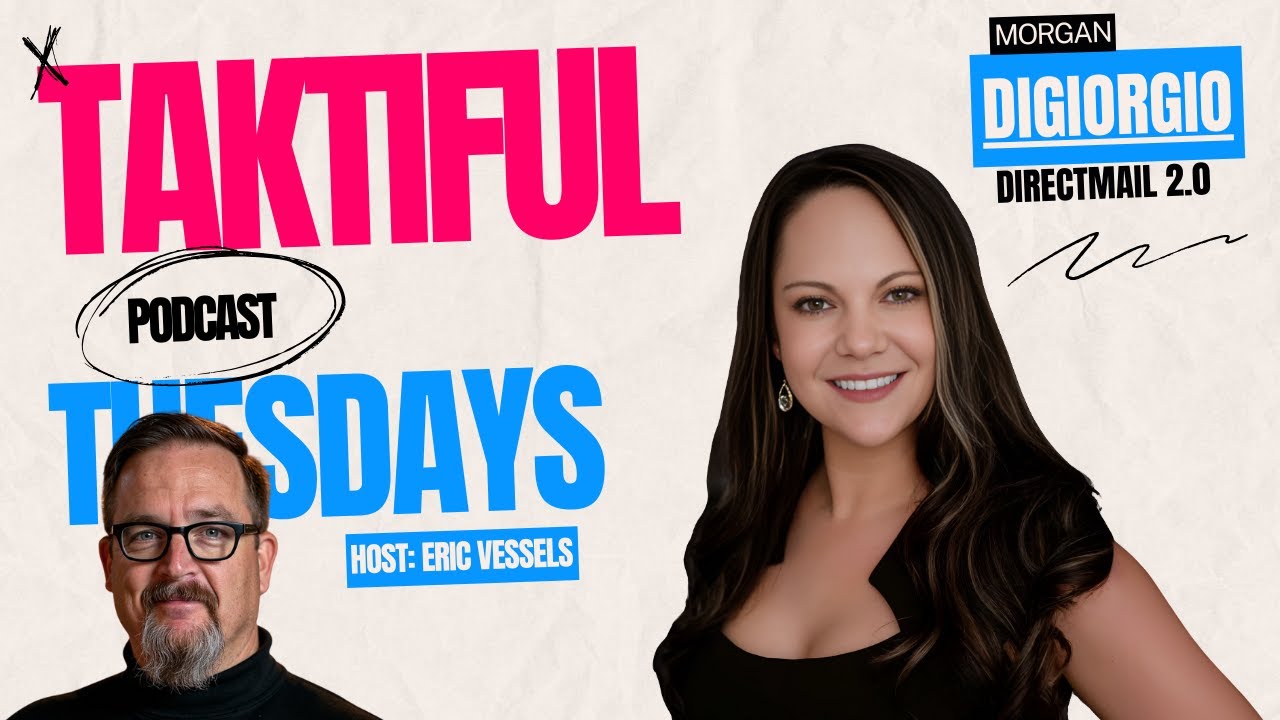
Eric Vessels · Let’s talk about Reactor · Chief Experience Officer · Taktiful

A conversation that starts with “vibe” quickly turns into something much more fundamental. In this INKISH interview, Morten Reitoft sits down with Eric Vessels from Taktiful to explore what may very well define the next phase of the print industry.

Taktiful isn’t just a company. It’s a community, a training platform, and—if you ask Eric—a mindset. One that moves beyond transactions and into something far more powerful: creating fans instead of customers. Because in a world where print has been heavily commoditized, differentiation is no longer about speed or price—it’s about value, emotion, and experience.

The conversation dives deep into what Eric calls “the value era” of digital embellishment. While traditional print has optimized for efficiency, embellishment opens a completely different playbook—one where uniqueness drives margin, and where tactile experiences create emotional engagement that digital media simply cannot replicate. This is where print regains its superpower.

Morten challenges the thinking, pushing into pricing strategies, psychology, and the industry’s tendency to undervalue its own capabilities. From market-variable pricing models to the psychology of touch, the discussion reveals how much opportunity is still left untapped—not because the technology isn’t there, but because the mindset often isn’t.

The interview also introduces Taktiful’s latest development: Reactor. A 3D visualization tool designed to bridge one of the biggest gaps in embellishment—showing rather than telling. By transforming layered PDF files into interactive, photorealistic previews, Reactor enables sales teams and customers alike to see, feel, and understand the value before anything is printed.

But beneath the tools and strategies lies something else. A clear belief that the print industry doesn’t need to become something new—it needs to rediscover what already makes it unique. The ability to create physical experiences that people can touch, feel, and emotionally connect with.

As Eric puts it: don’t take yourself too seriously—but take the business seriously.

And maybe that balance—between playfulness and purpose—is exactly what the industry needs right now.

Eric Vessels: https://www.linkedin.com/in/ericvessels/

En thumbnials of the images

Sheilae Siagian · The Print Nerd and Student · Toronto Metropolitan University

In this INKISH interview, Morten B. Reitoft speaks with Sheilae Siagian, a recipient of The Canadian Print Scholarships Program and one of the emerging young voices working to reshape how the printing industry is perceived.

Sheilae explains that her interest in print began in high school through communication technology classes and yearbook production, where design became tangible. The ability to create something physical, something that can be touched and experienced, became the foundation for her decision to pursue print as a career, even without any family background in the industry.

Together with Steve Falk, she developed the “Sheila the Print Nerd” video series, aimed at younger audiences about to choose their educational path. The idea is simple: show what the printing industry actually is. From manga books and packaging to signage and branded materials, the series focuses on real applications and presents them in a way that feels relevant and accessible.

A recurring theme in the conversation is perception. Many people associate print with declining products, but Sheilae points out that when the industry is explained through everyday applications, the reaction changes. Packaging, signage, and printed materials are everywhere, and once people understand that, the industry suddenly becomes both visible and relevant.

The discussion also touches on how younger and more experienced professionals can work together. Sheilae sees strong value in learning from experienced people while bringing curiosity and openness to the industry. Rather than viewing generations as fixed groups, she describes a need for collaboration where knowledge and new perspectives meet.

Looking ahead, she does not limit herself to a single role. With insight into premedia, press, and postpress workflows, she is drawn toward positions that combine technical understanding with coordination and responsibility, such as project management, where she can stay close to both the process and the final product.

The interview ends with an invitation to bring her concept to Europe, reflecting a shared ambition to strengthen awareness of print across markets and inspire more young people to see the opportunities the industry offers.

The Canadian Print Scholarships:
https://printscholarships.ca/

Sheilae Siagia:
https://www.linkedin.com/in/sheilaesiagian/

En thumbnials of the images

Oliver Schimek · Founder & Managing Director · Digital Print Group

Filmed on location in NĂŒrnberg, this INKISH feature marks the beginning of INKISH Deutschland’s first production tour, as Morten B. Reitoft visits Digital Print Group and speaks with Founder and Managing Director Oliver Schimek about what a modern, highly automated print business looks like in practice. The conversation quickly moves beyond the traditional definition of a printer. Digital Print Group positions itself as a true solution provider, where production is only part of the equation. With roughly half of its workforce dedicated to programming, workflow development, and customer-specific solutions, the company demonstrates how technology, software, and mindset come together to serve increasingly complex customer demands. The film highlights a production environment built on automation and flexibility, where a wide range of equipment from manufacturers such as Canon, Horizon, and Fujifilm is integrated into internally developed workflows rather than relying on standard turnkey systems. A notable aspect of the operation is the extensive use of robotics, implemented not only to address labor shortages in Germany but also to ensure consistent quality and remove repetitive tasks from employees. Serving large and demanding customers requires more than capacity. It requires a company-wide mindset focused on reliability, timing, and responsibility. With a team of 47 employees, Digital Print Group operates in a stable but evolving market, continuously adapting its processes and technologies to remain competitive. This INKISH film offers insight into how one company combines automation, in-house software development, and a strong service culture to redefine what it means to be a printing company today.

This site is registered on Toolset.com as a development site.